World War II
Presumed InnocentWorld War II functions as the historical background to Ivan Sabich’s wartime suffering and as a point of belated recognition for his son, Rusty. The war is not presented as a sustained battlefield narrative; it emerges through family history, a remembered scene of extreme deprivation, and Rusty’s later attempt to explain the strangeness he sees in his own life.
Historical Background
In Sandy Stern’s opening statement at Rusty’s trial, he identifies Ivan as a Yugoslavian freedom fighter persecuted by the Nazis. Stern says Ivan came to America in 1946, to a country where such atrocities would not recur, and invokes his experience to frame the contrast between the promise of refuge and the criminal accusation facing his son. World War II therefore enters the courtroom not as an independent account of the conflict but as part of the defense’s portrait of the Sabich family and its history.
Ivan Sabich’s Wartime Experience
Rusty’s account supplies a more intimate and harrowing history, much of it learned from relatives rather than from Ivan himself. Ivan’s parents were shot, he fled, and he spent the last years of his youth in camps. A cousin told Rusty that inmates ate a horse that had died and frozen in the snow: after three days, it was dragged beyond the compound’s barbed-wire fence, where people tore away its hide and seized the flesh. Some intended to cook what they took; others, panicked by hunger, began eating immediately. The memory joins the broad history of wartime persecution to a concrete image of bodily deprivation.
The War’s Afterlife in Rusty’s Understanding
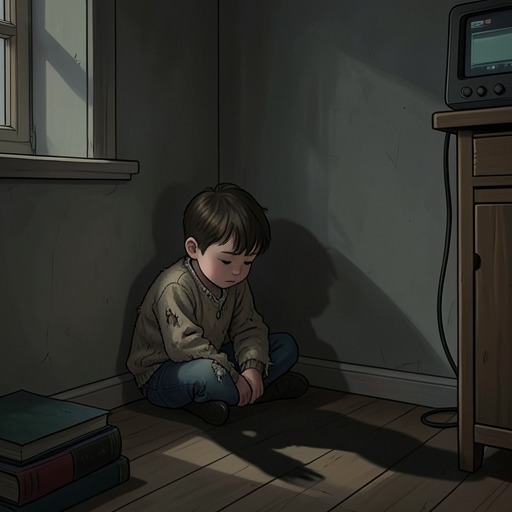
Rusty recalls that he had not seen his father visibly frightened before watching him in a lawyer’s office, where Ivan appeared diminished and afraid. Seeing that fear, Rusty understood more fully how his father’s deprivation had passed into his own life, and he was overcome by grief. The recognition is delayed: the history Ivan rarely discussed becomes legible to Rusty through his father’s present vulnerability and the family stories Rusty had previously held at a distance.
Later, speaking to Lionel Kenneally, Rusty describes his father as having spent much of World War II eating dead horses, placing that inherited extremity beside his mother’s strangeness and his own former wish to think of himself as an ordinary boy. The remark compresses a history of camps and hunger into Rusty’s self-description, showing how the war persists in the family not only as remembered suffering but as part of the explanation Rusty gives for his own sense of being unlike the person he thought he was.